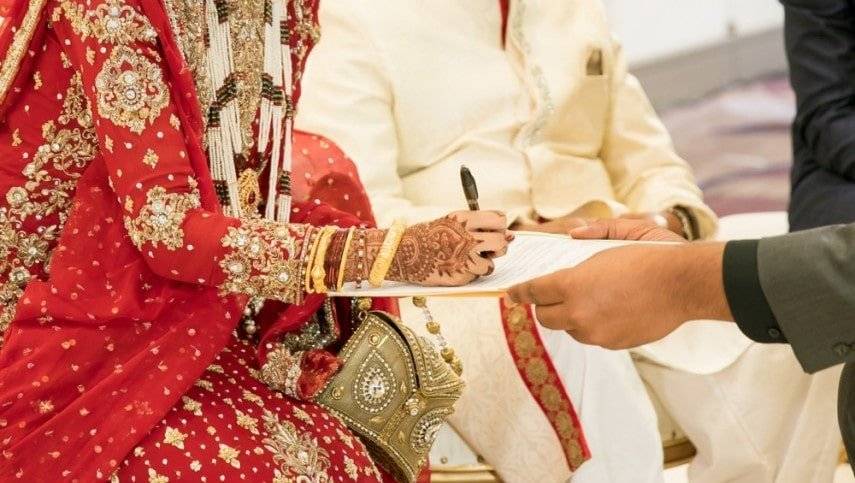
Marriage registration in Pakistan is the legal process through which a Nikah (marriage contract) is recorded with state authorities, creating enforceable marital rights under Pakistani family law. While the religious solemnization establishes the marital bond, it is the formal registration through municipal and national systems that grants spouses legal recognition, inheritance rights, and documentary protection. Understanding the legal significance of marriage registration is therefore essential for couples in Karachi and across Pakistan who seek a court-defensible marital status.
Legal Foundation of Marriage Registration in Pakistan
Under the Muslim Family Laws Ordinance 1961 and municipal marriage registration rules, every Muslim marriage solemnized in Pakistan must be registered with the relevant Union Council or Cantonment Board. The Nikah Registrar acts as a statutory intermediary, ensuring that the marriage contract is entered into the official public record maintained by local government authorities.
This requirement serves multiple legal purposes. It verifies the age and consent of the spouses, prevents denial of marital status, and establishes documentary evidence admissible in family courts. Without registration, proving the existence of a marriage often depends on oral testimony and secondary proof, which becomes vulnerable during inheritance disputes, maintenance proceedings, or marital litigation.
For couples opting for confidential or expedited solemnization, the procedural safeguards applied in Court Marriage in Karachi illustrate how legal verification and registration are integrated into a single coordinated process.
Core Documentation Required for Marriage Registration
The primary document for marriage registration is the Nikah Nama — the written marriage contract executed by the spouses, witnesses, and licensed Nikah Registrar. This contract contains legally operative clauses including identity details, addresses, Mahr terms, witness certification, and contractual conditions affecting marital rights.
Supporting documents required for registration typically include:
- CNIC copies of bride, groom, and witnesses
- Passport-size photographs of spouses
- Registrar’s license verification and seal
- Proof of marital status where applicable
- Completed Nikah Nama columns without alteration
Accuracy in these documents is critical because the Union Council relies entirely on the Nikah Nama data for entry into the municipal marriage register. Errors or omissions can delay or invalidate computerized registration. Legal practitioners assisting couples in Karachi frequently coordinate documentation simultaneously with solemnization so that registration can proceed without administrative defects.
From Nikah Nama to Computerized Marriage Record
Marriage registration in Pakistan involves a structured transition from manual contract to digitized national record. After the Nikah ceremony, the licensed Registrar submits the completed Nikah Nama to the Union Council of the area where the marriage was solemnized. The Secretary records the marriage in the official municipal register and enters the data into the provincial system, which synchronizes with NADRA’s civil database.
This conversion produces the Computerized Marriage Registration Certificate (CMRC), commonly called the NADRA marriage certificate. The CMRC functions as the primary documentary proof of marriage for legal, governmental, and international purposes. The administrative sequence underlying this transition is explained in procedural guidance available through NADRA Marriage Certificate Pakistan
https://pakistanmarriage.com.pk/nadra-marriage-certificate/, which clarifies how municipal registration becomes nationally verifiable civil status.
Legal Importance of NADRA Marriage Registration
Digitized marriage registration has become indispensable in modern Pakistani legal practice. The NADRA-linked certificate is required for immigration sponsorship, passport and CNIC marital-status updates, inheritance claims, banking documentation, and spousal litigation proceedings. Courts and administrative bodies treat the computerized certificate as conclusive evidence of marital status unless fraud is proven.
Equally important, digital registration prevents denial of marriage by either spouse. Once entered into NADRA-synchronized municipal records, the existence of the marriage becomes a permanent state-verified fact. This protection is particularly relevant in Karachi’s metropolitan legal environment, where disputes often involve cross-city residence or relocation.
Registration Considerations in Court Marriage Context
In Karachi, many couples choose court-facilitated Nikah arrangements for privacy or security reasons. In such cases, registration typically occurs immediately after solemnization, ensuring that the Nikah Nama is submitted without delay to the appropriate Union Council. This integrated procedure reduces the risk of late registration or documentation errors that sometimes arise in purely ceremonial marriages.
Timely submission remains essential. Delayed registration may require affidavits, re-verification by the Nikah Registrar, or administrative approval for late entry. Couples should also confirm that the officiating Registrar holds a valid municipal license for the relevant jurisdiction, because solemnization by an unlicensed officiant can create complications in subsequent registration.
Marriage Registration as Legal Status Protection
Marriage registration transforms a private religious contract into a publicly recognized civil status. This status confers enforceable marital rights including inheritance entitlement, maintenance eligibility, spousal recognition in official records, and legitimacy of offspring under family law. The registered marriage becomes legally defensible in any Pakistani court, providing certainty and stability for the family unit.
For couples in Karachi, the integration of solemnization and registration procedures ensures that the marriage is not only valid under Islamic law but also fully recognized under state law. By ensuring accurate documentation, licensed registration, and NADRA-synchronized recording, the legal status of the marriage becomes secure against denial or dispute.